

How to Manage Event Staff Service Flow

Last Updated: October 26, 2026
Quick Summary
To manage event staff service flow means orchestrating how your catering team moves through an event, coordinates handoffs, and delivers service with precision. Event staff service flow connects three critical elements: clear roles, precise timing, and real-time communication.
Assign specific roles to each team member including event captain, station managers, service staff, setup crew, and kitchen support to prevent gaps and create accountability.
Use staff-to-guest ratios of 1 per 10-12 guests for plated dinner, 1 per 15-18 for buffet, and 1 per 20-25 for cocktail receptions to ensure adequate coverage.
Build shift rotations with 20-30% more staff during peak periods and breaks every 90 minutes to maintain energy and prevent service mistakes.
Establish a clear chain of command where service staff report to station managers, who report to the event captain, ensuring coordinated decision-making.
Conduct a pre-event briefing 60-90 minutes before guests arrive covering logistics, roles, timeline, guest interaction standards, and safety procedures.
Table of Contents
Understanding Event Staff Service Flow and Why It Matters
At Something Classic, we've managed events from intimate celebrations to gatherings for thousands.
Event staff service flow connects three critical elements: clear roles, precise timing, and real-time communication. Without it, even the best food and finest venue fall flat.
This guide covers defining roles, scheduling for peak periods without burnout, building timelines, establishing communication systems, and measuring whether your service flow works.
Event Management Best Practices from the Hospitality Industry Association emphasize that staff coordination directly impacts guest satisfaction.
Define Catering Staff Roles and Responsibilities
Every person on your team needs to know exactly what they own. Vague responsibilities create gaps. Clear roles create accountability.
Core Team Positions
Start by identifying the positions your event requires. Most events need:
Event Captain or Lead: Oversees the entire service, makes decisions, handles escalations
Station Managers: Own specific areas (bar, appetizer stations, dining room, dessert)
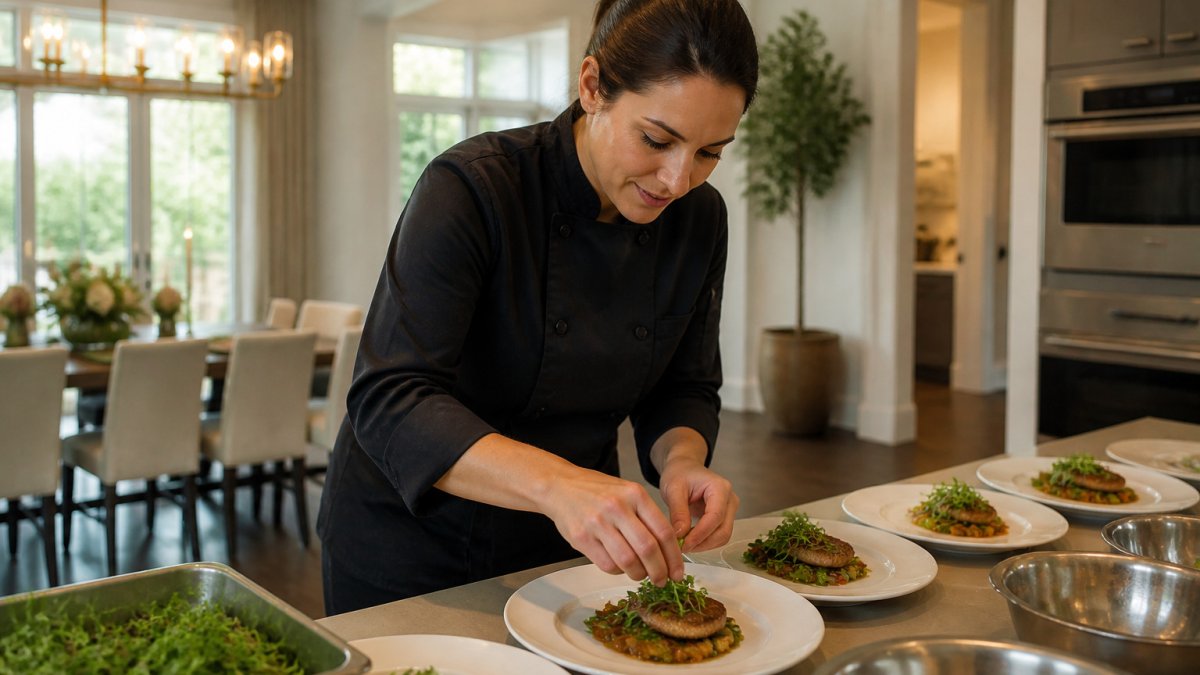
Service Staff: Execute plating, delivery, table service, guest interaction
For larger events, add:
Runner or Expediter: Moves food from kitchen to service stations
Guest Services: Manages registration, wayfinding, seating
Floaters: Handle unexpected needs and support overloaded stations
Assign each role a specific person. No "we'll figure it out" assignments.
Role-Specific Tasks and Accountability
Write down what each role does:
Event Captain: Conducts pre-event briefing, monitors service flow in real time, makes timing decisions, communicates changes.
Station Manager (Appetizer Station): Arranges platters before guests arrive, maintains presentation, restocks, signals kitchen when trays empty.
Kitchen Support: Coordinates with chefs on timing, ensures correct plating, keeps food at proper temperature, manages flow from kitchen to stations.
Distribute these tasks in writing before the event to prevent someone saying, "I thought you were handling that."
You can reference how to hire a chef for your private event and understand their qualifications to learn how professional event staff are selected and trained for managing service flow.
Create an Event Staffing Schedule That Covers Peak Periods
A schedule means the right number of people at the right time, with breaks built in so no one burns out mid-service.
Calculating Staff-to-Guest Ratios
The ratio depends on your event type. These are practical guidelines:
Cocktail reception (heavy appetizers, no sit-down meal): 1 staff member per 20-25 guests
Plated dinner service: 1 staff member per 10-12 guests
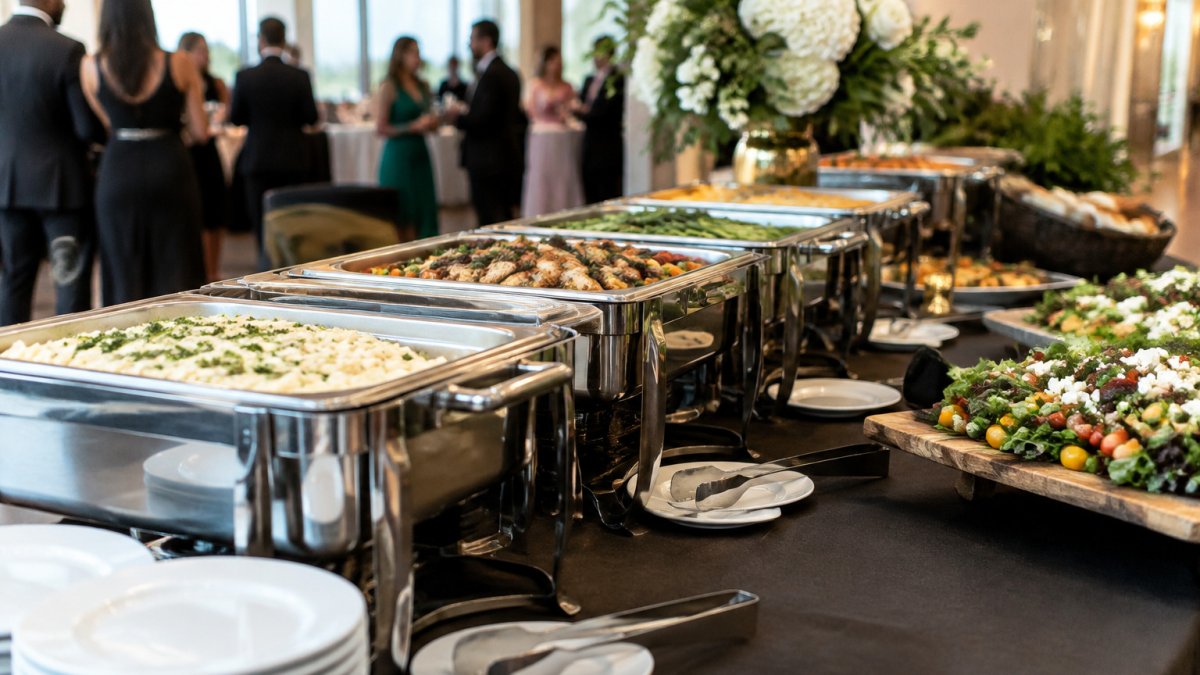
Buffet service: 1 staff member per 15-18 guests
These ratios assume experienced staff; add 20-30% for trainees. Smaller events (under 50) need slightly higher ratios, complex service needs more staff, and sprawling venues need extra coverage. For 100 guests with plated dinner service, you need 8-10 service staff plus an event captain, station managers, and kitchen support.
Planning Shift Rotations and Break Coverage
Long events exhaust people. Exhausted staff make mistakes. Mistakes hurt the guest experience.
Plan shifts like this:
Identify peak periods: Usually the first 30 minutes after guests arrive and during the main course.
Schedule overlaps: Have 20-30% more staff during peak times than slow times.
Build in breaks: No one should work more than 90 minutes without a 15-minute break; for events over 4 hours, rotate staff off for 20-30 minutes.
Stagger arrivals and departures: Stagger by 15-30 minutes so setup and breakdown don't create chaos.
Example for a 4-hour plated dinner event:
2:00 PM: Setup crew arrives (12 people)
3:00 PM: Service staff arrives, begins final preparations (10 people)
4:00 PM: Event starts, all hands on deck (10 service + 2 stations managers + 1 captain)
This keeps energy high and prevents the mid-event slump.
These ratios guide how many staff members you need based on your service style.
Event Type | Staff-to-Guest Ratio | Notes |
Cocktail reception | 1 per 20-25 guests | Heavy appetizers, no sit-down meal |
Plated dinner service | 1 per 10-12 guests | Most labor-intensive service style |
Buffet service | 1 per 15-18 guests | Guests serve themselves |
Bar service only | 1 per 75-100 guests | Bartender coverage only |
Build an Event Service Timeline for Coordinated Execution
A timeline helps you manage event staff service flow by serving as your roadmap: what happens when, in what order, and who does it.
Pre-Event Setup and Staff Arrival
Start here:
T-minus 2 hours: Setup crew arrives, begins table setup, arranges furniture, tests AV
T-minus 90 minutes: Decorative elements placed, linens arranged, place settings finalized
T-minus 60 minutes: Service staff arrives, reviews assignments, inspects stations
This prevents late-arrival panic and unprepared stations when guests walk in.
Guest Arrival, Registration, and Wayfinding
The first impression sets the tone:
Minute 0-5: Guests arrive, greeted at entry, directed to coat check or registration
Minute 5-15: Registration staff checks in guests, directs them to cocktail area
Minute 10-20: Service staff circulates with appetizers, offers beverages
Have one person whose only job is wayfinding and guest questions during arrival.
Service Phases and Handoff Points
This is where most service flows break down: handoffs, when one phase ends and another begins, are critical.
Phase 1: Cocktail & Appetizers (30-45 minutes)
Service staff circulates with trays
Station managers maintain appetizer stations
Handoff: When dinner is ready to be plated
Phase 2: Transition to Dining (10-15 minutes)
Guests are seated
Water and wine poured
Handoff: When all guests are seated and first course is plated
Phase 3: First Course (10-15 minutes)
Service staff delivers first course
Clear plates promptly when guests finish
Handoff: When kitchen signals main course ready
Phase 4: Main Course (20-30 minutes)
Main course delivered
Refill beverages, check on guests
Handoff: When main course plates cleared
Phase 5: Dessert & Coffee (15-20 minutes)
Clear main course plates
Deliver dessert
Coffee and tea service
At each handoff, the event captain communicates the next phase to the team. No surprises.
Breakdown and Departure
End strong:
After dessert: Service staff begins clearing, resetting tables if needed
30 minutes before end: Breakdown crew begins removing decorative elements
At event end: All service staff clears remaining items, resets tables
Breakdown is when people get sloppy because the event's over. Set a clear timeline and hold the line.
Deliver a Comprehensive Event Staff Briefing Checklist
A briefing is where you prevent problems. It's the 30 minutes that determines whether the next 4 hours run smoothly.
Pre-Event Briefing Content
Hold a briefing 60-90 minutes before guests arrive. Cover:
Logistics:
Event start and end times
Expected guest count
Menu and service style (plated, buffet, passed)
Roles and Responsibilities:
Read the role assignments aloud
Confirm each person knows their station or assignment
Answer questions about their role
Service Flow Timeline:
Walk through the timeline you created
Explain each phase and when it happens
Show where handoffs occur
Guest Interaction Standards:
How to greet guests
How to describe menu items
How to handle special requests
Problem Escalation:
If something breaks, tell the station manager
If a guest has a complaint, tell the event captain
If there's a safety concern, stop and report immediately
Safety and Food Handling:
Proper hand washing
How to carry plates safely
Where to find first aid supplies
Print this checklist and go through it. Don't assume people know.
On-Site Team Huddle Before Service Begins
15 minutes before guests arrive, gather the team for a final huddle:
Event captain confirms all stations are ready
Each station manager reports: "Appetizers ready," "Bar stocked," etc.
Event captain reminds everyone of the timeline
That huddle takes 5 minutes and prevents chaos.

Clear directives during these briefings ensure that every team member remains aligned with established
staff compliance protocols
while navigating the complexities of high-volume service environments.
Establish Communication Protocols and On-Site Supervision
Real-time communication is how you adapt when things change. And things always change.
Real-Time Communication Tools
Choose tools that work for your event:
Walkie-Talkies or Headsets:
Event captain can reach all staff instantly
Station managers can request support
Kitchen can signal when items are ready
Phone or Group Text:
Works for smaller events
Slower than walkie-talkies but less intrusive
Good backup if headsets fail
Hand Signals:
Eye contact and a nod to the station manager means "clear those plates"
A raised hand means "need support"
Works for smaller, quieter events
Use whatever keeps your team connected. Test it before the event. Nothing worse than a dead battery on a headset mid-service.
Supervision Structure and Escalation
Create a clear chain of command:
Service Staff report problems to Station Manager
Station Manager reports to Event Captain
Event Captain makes decisions and communicates to the team
Example: a guest requests a dietary accommodation the server didn't know about. The server tells the station manager, who tells the event captain, who checks with the kitchen and relays the answer back down the chain. No one decides alone, everything flows through the event captain.
Plan Contingencies and Handle Last-Minute Changes
Events never go exactly as planned. Prepare for what usually goes wrong.
Common Event-Day Disruptions
Guest Count Swings: Plan for 10-15% variance in final headcount and have extra food prepped.
Staff No-Shows: Have a backup on standby or know how to redistribute tasks; reduce service slightly rather than overwork your team.
Timing Changes: Keep your team flexible on phase timing, but maintain the sequence.
Venue Problems: Have a maintenance person on call for failed AC, lights, or broken tables.
Backup Plans and Staff Absences
Before the event, identify:
Who steps in if the event captain is unavailable? Name the second-in-command.
If a station manager doesn't show, who covers? Cross-train someone.
If kitchen support is short, what gets cut? Decide in advance, skip a garnish or simplify plating.
Write these decisions down so you execute the plan instead of panicking.
Measure and Improve Service Flow Performance
You can't improve what you don't measure.
Key Performance Indicators for Service Flow
After each event, rate these on a 1-5 or pass/fail scale and track trends:
Guest satisfaction: Did service feel smooth and attentive?
Timing accuracy: Did each phase start and end when planned?
Staff burnout: Did anyone leave exhausted or make mistakes from being overwhelmed?
Post-Event Debrief and Staff Feedback
Within 48 hours of each event, gather your core team (event captain, station managers, kitchen lead) for a 20-minute debrief.
Listen, your staff sees problems you don't. If three people say the appetizer station was understaffed, it was.
At Something Classic, we've built our reputation on seamless service execution paired with elevated cuisine.
Ready to plan an event where every detail flows perfectly? Contact Something Classic to discuss your vision and how we can bring it to life with seamless execution and refined hospitality.
Frequently Asked Questions
How do you calculate the right number of event staff needed for a given guest count?
The standard ratio depends on service style and event type. For plated dinners, aim for 1 server per 8-12 guests; for cocktail receptions, 1 per 15-20 guests. Account for kitchen staff, bartenders, and supervisors separately. Peak periods (arrival, main course service) may require temporary additional coverage. Adjust based on venue layout, menu complexity, and guest demographics. Professional catering teams like Something Classic assess your specific event to recommend the right staffing level.
What should be included in an event staff briefing checklist?
A comprehensive event staff briefing checklist covers venue layout and exits, menu details and dietary restrictions, guest arrival procedures, table assignments, service sequence and timing, dress code and appearance standards, guest interaction guidelines, emergency protocols, and point-of-contact information for supervisors. Include any special requests or VIP guests. Walk through the run of show, clarify role assignments, and address questions before service begins. This ensures consistency and reduces confusion during the event.
How do you manage event staff service flow when unexpected changes happen on the day of the event?
Establish a clear chain of command and communication protocol before the event. Assign a lead supervisor or event manager as the decision-maker for real-time changes. Brief staff on flexibility and common adjustments (late arrivals, menu swaps, timing shifts). Use walkie-talkies or headsets for instant updates across the team. Have backup staff on standby for absences, and pre-plan contingencies for common disruptions like delayed guest arrival or equipment issues. Document changes and communicate them immediately to all relevant team members.
Why does professional catering service flow matter for my event experience?
Smooth service flow directly impacts guest satisfaction and event success. When staff are well-trained, coordinated, and attentive, guests enjoy their meal without awkward waits, food arrives at the right temperature, and the event feels polished and intentional. Poor coordination leads to cold plates, confused staff, and a disjointed experience that overshadows your event. Professional catering companies like Something Classic manage every detail of service flow, from staffing schedules to real-time coordination, so your guests feel cared for and your event runs seamlessly.
Contact Us
Add somethingclassic.com as a preferred source on Google →

Comments