

How Do You Cater an Event for a Large Group?

Last Updated: November 4, 2026
Quick Summary
Large group catering works best when you plan by category rather than guessing, starting with a realistic headcount that includes staff and late guests. Choose a service style that matches your budget and venue, keep the menu focused on dishes that hold well, and work backward from service time to set your timeline. Settling these decisions early is what keeps a large group catering event running smoothly.
Plan portions by category first, then total the counts rather than multiplying one number.
Ask the client for a realistic RSVP estimate, not the invitation count.
Dishes like braised meats and grain salads generally hold quality better over long service windows.
Staff more heavily during the first 30 minutes of service, when demand peaks.
Collect every dietary restriction before the menu is finalized to avoid late changes.
Table of Contents
Feeding 50 people is not 50 times the work of feeding one. Once a guest list passes a few dozen, the problems change: food has to hold its temperature for longer, lines form, dietary requests multiply, and the people serving need a plan they can actually follow. Something Classic has been catering events in Charlotte, NC for over three decades, and the planning habits that make large events run smoothly are fairly consistent. This guide walks through them, starting with what actually changes when the crowd grows.
What Changes When You Cater for a Large Group
The first shift is scale in every direction. The catering industry is large and crowded, and many of the businesses in it serve events in the middle range of guest counts, where most planning problems tend to appear.
At this size, the decisions that matter most are logistical. You need to know how food will be held, how guests will move through the line, and how many people will be working the room. A menu that looks easy on paper can stall when 80 people arrive within the same 15-minute window.
How Much Food to Order for 50 People and Beyond
Portion planning is where most large-group orders go wrong, and the fix is a repeatable method rather than a guess. Guests eat differently depending on whether the food is a main meal, a cocktail reception, or a buffet with several options, so plan by category first, then total the counts.
Start with a working headcount that includes staff, vendors, and a realistic late-arrival allowance. For a seated dinner, a common approach is one entree per guest plus a small buffer for staff and late guests. For a buffet with several entrees, guests typically take a smaller portion of each, so planning by category and adding a buffer helps. For a cocktail reception, planners generally estimate appetizer pieces per guest by the length of the event and add extra for longer events.
Side dishes and salads scale differently from entrees, and buffets usually call for larger amounts because guests serve themselves more generously. Confirm the caterer's actual tray yields rather than assuming, because tray dimensions and fill levels vary.
Dietary portions need their own line in the count. Plan restricted-diet entrees based on the number of guests who request them, with a small margin above that count so those guests are not left with only sides. Label every dish clearly so guests can choose confidently without asking.
Watch out: the most expensive mistake is ordering to the invitation count instead of the expected attendance. Ask the client for a realistic RSVP estimate and agree in writing on what happens if the crowd is larger, usually an added per-person charge for extra meals or a buffer of a few extra trays held in reserve.
Here is a simple planning framework for a 50-guest event:
Event Style | Planning Basis | Buffer Suggestion |
Seated dinner | One entree per guest; 4-6 oz starch and 3-4 oz vegetables per guest | Add 5-10% for staff and late guests |
Buffet | Two to three entrees at about two-thirds of a full portion each | Add 10% and plan for heaviest-eating guests |
Cocktail reception | 4-6 appetizer pieces per guest in hour one, 2-3 per hour after | Add a second round for events longer than two hours |
Dietary menus | Vegetarian and restricted dishes for 15% of headcount when 10% of guests request them | Keep two extra portions of each restricted dish on hand |
For groups beyond 50, planning by category rather than multiplying a single number helps, and a larger buffet usually needs more serving points so the line keeps moving.
Large Group Catering Menu Ideas That Hold Up at Scale
Some dishes survive a long service window and a crowd better than others. Braised meats, grain salads, roasted vegetables and composed pasta dishes generally hold quality when kept at proper temperatures. Delicate fried items and anything that wilts quickly need tighter timing.
Keep the menu focused. Fewer dishes prepared well beat many dishes prepared under pressure. Include at least one option that works for guests with common dietary needs, and label every dish clearly so guests can choose confidently without asking.
Something Classic's approach draws on farm-to-table ingredients. For large groups, a shorter, well-executed menu tends to run more smoothly.
Service Styles and Logistics for Big Crowds
Service style affects the entire event, and the right choice depends on budget, venue, and how much control you want over the guest experience. The four common models for large groups differ mainly in staffing, equipment, and setup time. Whichever service style you choose, planning how to batch cocktails can help keep drink service consistent without adding unnecessary pressure to the staff.

Service Model | Relative Cost | Staffing | Setup and Equipment | Best For |
Drop-off | Lowest | Delivery only; no on-site servers | Chafing dishes or insulated carriers; venue provides tables and power | Offices, casual gatherings, tight budgets |
Boxed meals | Low to moderate | Minimal; sometimes one attendant | Individually packaged; labels for dietary needs | Business meetings, staggered arrivals, off-site teams |
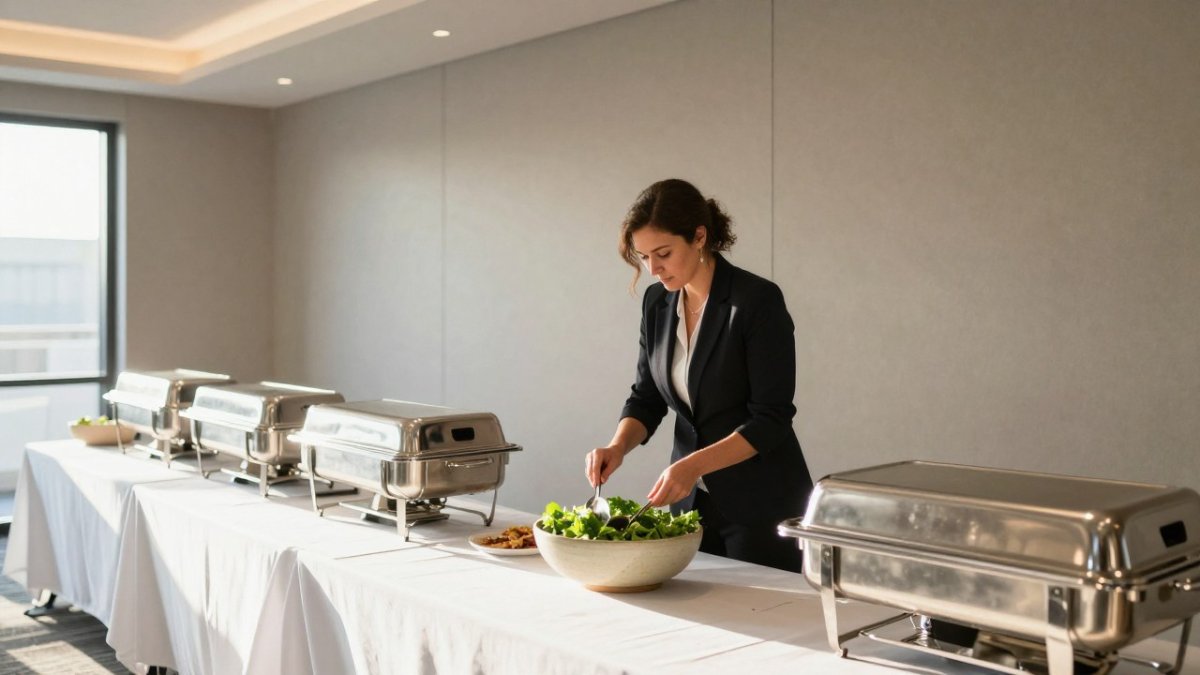
Buffet or stations | Moderate | Servers and attendants to replenish and manage lines | Chafing dishes, serving utensils, linens, trash and dish collection | Social events and weddings with mixed menus |
Full-service plated | Highest | Kitchen and service staff scaled to guest count | Full kitchen or prep space, plateware, glassware, staff for courses | Weddings and formal events where timing matters |
A plated dinner requires a larger staff and a tighter schedule. A buffet or stations approach spreads guests out but needs enough serving points to avoid bottlenecks, and a separate line for dietary items keeps those guests from waiting.
Map out the room before the event. Note where the line will start, where guests will return for seconds, and where dirty dishes will be collected. Bottlenecks usually form at the entry point to the buffet and near the bar, so keep the bar away from the food line and leave a clear path for staff carrying trays.
Timing, Staffing and Setup Flow
Work backward from the service time. Set a load-in window, a staff arrival time, a setup checkpoint, and a point where food goes out. Build in extra time for anything that depends on venue access or outside vendors. Confirm the venue's delivery window, elevator or loading-dock access, and any restrictions on open flames or propane before the menu is finalized.
Staffing ratios depend on service style and menu complexity, but a common mistake is under-staffing the first 30 minutes of service, when demand peaks. Plan for more people at the start, then scale back as guests settle. Buffet service needs servers or attendants to replenish and manage the line, plus kitchen staff; plated service needs more. Confirm who is responsible for trash, dish collection, and cleanup at the end of the night, because those tasks are easy to overlook in a quote.
Watch out: if the venue sets requirements for vendors, such as timing or insurance, get those terms in writing before signing any catering contract, since they can change staffing and equipment needs.
Planning Outdoor Event Catering for Large Groups
Outdoor events add weather, heat and power considerations. Food safety rules around holding temperatures still apply, so plan for holding equipment that can run reliably on site. Shade, ventilation and enough prep space matter as much as the menu itself.
Build a rain or wind plan. If a tent or covered area is part of the venue setup, confirm its capacity with the venue before finalizing the layout. Keep high-risk items, like dairy-based salads and fresh seafood, on ice and out of direct sun until service.
Wedding Event Catering for Large Groups: What to Plan Early
Weddings place the heaviest demands on timing and coordination. The decisions that most affect the day are usually made months in advance: the guest count, the service style, the venue access, and the dietary list.
Settle the guest count first, because most other decisions depend on it. Next, confirm the venue rules for setup, power and vendor access. Then collect every dietary restriction before the menu is finalized. Couples often discover allergies late, and changing a plated course a week before the wedding is far harder than planning for it early.
A tasting before the final menu is locked is a good idea. Tasting in a kitchen is not the same as tasting at scale, so ask how the dishes will be held, plated and served for your specific headcount.
Booking Your Large Group Catering With Something Classic
Large-group catering rewards early planning. The clients who have the smoothest events tend to share the same habits: a firm headcount, a clear service style, a menu chosen with the venue in mind, and a timeline shared with everyone involved. If you are planning a wedding, you can review our wedding catering packages to see what each one includes and how they fit different event sizes.
For weddings in Charlotte, our wedding catering service page covers custom menus and planning support. Corporate hosts planning service flow for a big crowd can also read our guide on 7 corporate event catering tips for Charlotte planners, and anyone working out staffing and timing should see our guide on how to manage event staff service flow. For a deeper look at quality control and portion sizing at scale, our guide to ensuring event catering quality covers the details.
Contact Something Classic to talk through your guest count, menu and timeline, and we will put together a plan built for your event.
Frequently Asked Questions
How much food should I order for a large group?
Plan entree amounts based on whether the event is a light reception or a full dinner, adding sides and appetizers accordingly. Confirm the count with your caterer at least a week out, and ask whether they recommend extra for buffets with heavy eaters or limited options. Accurate guest counts reduce waste and keep pricing predictable. Pricing depends on quantity, date, and delivery details, so request a quote from Something Classic for current figures.
How far in advance should I book a caterer for a large event?
For large groups, booking several months ahead is safest, especially for weekends, holidays, and peak wedding season. Caterers need time to confirm staffing, rentals, and menu sourcing for bigger headcounts. Early booking also gives you room to finalize dietary accommodations and service style. Something Classic works with clients on custom timelines, so reach out as soon as your date and guest count are set.
How do caterers handle dietary restrictions at large events?
Caterers usually collect dietary needs through RSVP forms, then label dishes and prepare restricted meals separately to limit cross-contamination. For guests with celiac disease or severe allergies, ask any caterer how they handle prep surfaces, utensils, and staff training. Share the full list of restrictions early so the menu can be adjusted before final counts. Contact Something Classic to discuss how they would handle your specific guest needs.

Comments